Yella Beezy Murder Trial: Closing Arguments Put the Evidence and Reasonable Doubt Before the Jury

By Ivory | Her Mind, Her Safety
DALLAS, TEXAS — After days of testimony, disputed witness statements, financial records, surveillance evidence, and competing interpretations of events, the capital murder trial of Dallas rapper Yella Beezy has reached one of its most consequential stages: closing arguments.
Markies Deandre Conway, professionally known as Yella Beezy, stands accused of arranging the November 11, 2020, killing of fellow Dallas rapper Melvin Noble Jr., known professionally as MO3.
Prosecutors allege that Conway employed or promised to pay Kewon White to carry out the killing. Conway is presumed innocent unless the State proves the charge beyond a reasonable doubt.
As attorneys presented their final arguments, the central question was not simply whether MO3 was murdered, but whether the evidence established Conway's criminal responsibility under Texas law.
The Prosecution's Case: Connecting the Circumstantial Evidence
Throughout the trial, prosecutors sought to connect witness accounts, phone records, financial activity, and surveillance information to their allegation that MO3's killing was arranged in exchange for payment.
A significant part of the State’s case involved establishing connections among individuals associated with the investigation and examining their movements and communications before the shooting.
Testimony concerning a Dallas barbershop associated with Jerry Johnson also became relevant to the prosecution’s theory. Witnesses were questioned about whether Conway and other individuals had been present at or near the location.
However, testimony establishing that individuals had visited the same location does not, by itself, establish that a murder-for-hire agreement occurred there.
The prosecution’s challenge in closing arguments was to explain how the evidence, considered together, supported every element of the charged offense beyond a reasonable doubt.
Circumstantial evidence can support a criminal conviction. Nevertheless, jurors must determine whether the inferences the State asks them to draw are sufficiently supported by the evidence admitted at trial.
The Defense’s Position: Where Is the Proof of an Agreement?
The defense challenged the State’s interpretation of the evidence and the alleged connection between Conway and the murder-for-hire arrangement.
One of the central issues was whether financial activity and associations with other individuals established criminal intent or had explanations unrelated to the killing.
During the defense’s presentation, Conway’s aunt testified about his history of withdrawing cash and providing financial assistance to family members. That testimony offered an alternative explanation for cash transactions the prosecution had examined.
The defense also presented testimony concerning Conway’s professional activities and travel, including evidence related to his music career.
The broader defense position centered on the distinction between suspicion and proof.
Even when multiple pieces of circumstantial evidence appear connected, jurors must decide whether those connections establish the defendant’s guilt beyond a reasonable doubt rather than merely raise questions about his conduct or associations.
The Importance of Witness Credibility
Witness credibility was another significant issue throughout the proceedings.
The trial included disputes concerning earlier statements, testimony given before a grand jury, and whether certain accounts could be relied upon.
One particularly important legal distinction appeared in the judge’s instructions to jurors: grand jury testimony admitted for impeachment purposes could not be treated as substantive evidence establishing guilt.
That distinction matters because a prior inconsistent statement may be relevant when evaluating a witness’s credibility without independently proving that the events described in the statement occurred.
For jurors, understanding how particular evidence may legally be used is just as important as remembering what witnesses said.
What the Judge Told the Jury
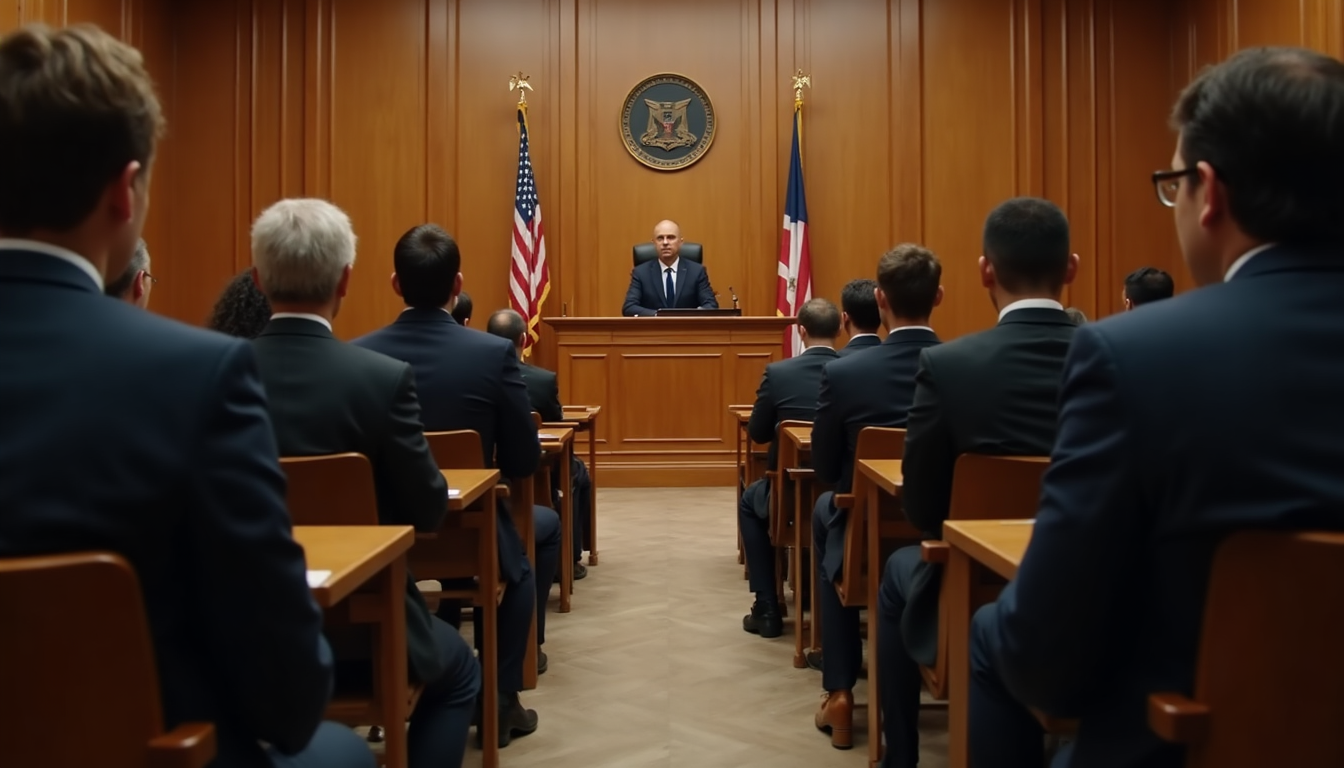
Before closing arguments, the judge instructed jurors on the legal standards governing their decision.
Among the most important principles were the presumption of innocence, the State’s burden of proof, and the requirement that guilt be established beyond a reasonable doubt.
The jury also received instructions concerning Texas’s law of parties, which addresses circumstances in which a person may be held criminally responsible for an offense committed by another individual.
Mere presence at a location, or association with someone who commits a crime, is not enough by itself to establish criminal responsibility.
Jurors must apply the legal requirements to the evidence admitted during the trial.
The defendant is not required to testify, explain his conduct, or prove his innocence. The burden remains entirely with the prosecution.
What Happens After Closing Arguments?
Once closing arguments conclude and the case is submitted to the jury, jurors must deliberate and determine whether the prosecution has established every required element of the charged offense.
Their decision must be unanimous.
If jurors unanimously determine that the State has proven the charge beyond a reasonable doubt, they may return a guilty verdict. If the State has not met that burden, the appropriate verdict is not guilty.
The jury’s responsibility is to evaluate the evidence and follow the court’s instructions, rather than rely on public opinion, media commentary, or speculation.
Ivory’s Courtroom Analysis: Evidence Versus Assumption
One of the most important lessons from this trial is the difference between evidence that raises suspicion and evidence that satisfies the legal burden required for a conviction.
The prosecution does not necessarily need a confession or eyewitness account of an alleged agreement. Circumstantial evidence can be legally sufficient.
However, that evidence must still establish the charged offense beyond a reasonable doubt.
Likewise, the defense is not required to prove an alternative theory of the crime. Its role may include challenging the reliability, interpretation, or sufficiency of the State’s evidence.
For me, the most important question is whether the evidence establishes an intentional arrangement involving Conway and the killing of MO3, rather than simply showing relationships, movements, or financial transactions that may be open to more than one interpretation.
That is the distinction jurors must confront as they consider the case.
Final Thoughts
The killing of MO3 remains a devastating loss for his family, loved ones, and the Dallas music community.
At the same time, the criminal justice system requires that allegations against an accused person be evaluated according to the evidence and the law.
The closing arguments bring those two realities into sharp focus: the demand for accountability and the constitutional protections that apply to every defendant.
As this trial moves toward a verdict, the central question remains:
Has the State proven its case beyond a reasonable doubt?
That is a question only the jury can answer.
Join the Conversation
Which closing argument did you find more persuasive, and what evidence most influenced your assessment?
Share your thoughts respectfully and follow Her Mind, Her Safety with Ivory for continued courtroom coverage, legal analysis, and reporting on cases that impact our communities.
Because there's always more than a headline.
Editorial Note: This article discusses allegations, testimony, legal arguments, and jury instructions. It does not represent a finding of guilt. Conway is presumed innocent unless proven guilty beyond a reasonable doubt.
Coverage: Her Mind, Her Safety with Ivory | Courtroom Journalism and Criminal Justice Analysis.


Comments